A dream
An image survives waking and continues changing the person who saw it.
A modern mystical philosophy for a living universe
Dreamism begins with a possibility: consciousness belongs within a living universe. Creation unfolds within G-d—the Divine Dreamer—and every conscious being participates in what the Dream becomes.
Bring your wonder. Bring your reason. Look again.
 You are already inside
The moment before belief
Perhaps it was a dream that followed you into daylight. A coincidence that arrived with impossible timing. A work of art that seemed to carry another consciousness across years or centuries. A loss that demanded an answer larger than oblivion. A moment beneath the night sky when existence felt too vast, too intimate, and too alive to be meaningless.
Most people encounter the mystical thread before they possess language for it. Dreamism asks whether those moments are isolated accidents—or glimpses of a deeper reality in which consciousness, intention, meaning, and matter remain connected.
An image survives waking and continues changing the person who saw it.
An inner question and an outer event meet with unsettling precision.
Another consciousness enters yours through form, sound, image, or language.
A human bond reveals that meaning cannot be reduced to usefulness alone.
Vastness makes you feel not erased, but mysteriously included.
One proposition, three consequences
You are a participant within creation. Your consciousness is one perspective through which the Divine Dream encounters itself.
Thought becomes speech. Speech becomes action. Action becomes pattern. Pattern becomes relationship, culture, institution, memory, and consequence.
Mysticism reaches fulfillment as awareness becomes compassion, courage, creation, justice, stewardship, and Tikkun Olam.
Creation that survives its creator
A composer’s decisions become marks. Generations later, another body can breathe into them and release that intention as sound.
An inward way of seeing becomes materially present and enters the awareness of people the artist never met.
Thought crystallizes in language. A mind speaks across generations and generates possibilities the author may never witness.
Care, ancestry, hospitality, memory, and devotion become tangible enough to be physically received by another person.
Choose your doorway
Begin with Dreamism’s central vision of G-d, consciousness, creation, and the sacred reality in which every soul participates.
Enter the Divine Dream →Explore meaningful coincidence through evidence, probability, humility, and the discipline of honest interpretation.
Follow the Signs →Examine words, symbols, vows, art, ritual, disciplined action, and the ways human meaning acquires material power.
Enter Dreamist Magic →Bring mystical insight into ordinary conduct, mutual aid, justice, stewardship, community, and the conditions others inherit.
Enter the Work of Repair →Why this philosophy exists
A few weeks after my eighth birthday, my three-year-old brother died of cancer. The religious answers offered to me contradicted one another, and the certainty with which they were delivered created fear rather than comfort.
For years, I responded by rejecting spirituality. Yet grief, consciousness, morality, love, death, and the strange persistence of the sacred remained. Dreamism grew from the long attempt to face those questions with reason, openness to mystery, and a refusal to accept cruelty disguised as faith.
It is offered as a framework for people who remain willing to look, question, imagine, and participate.
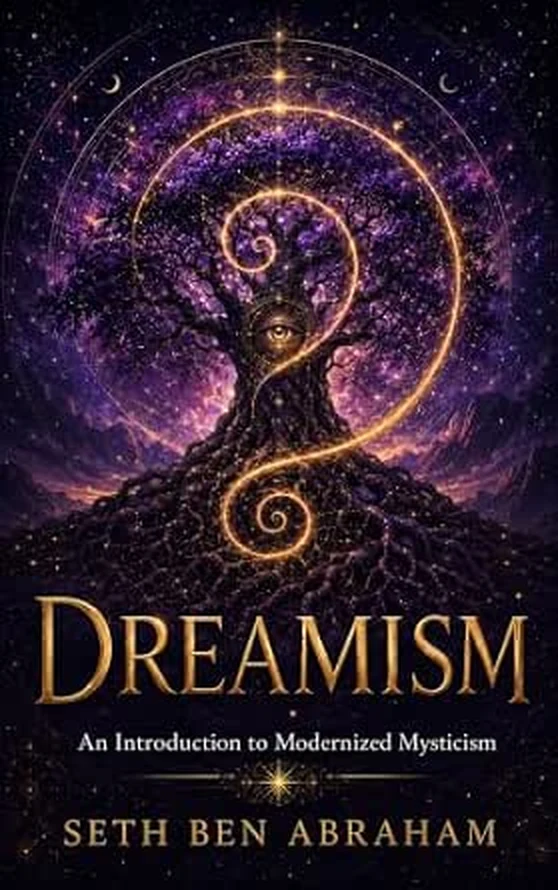
The complete journey
Dreamism: An Introduction to Modernized Mysticism develops the framework through G-d and the Divine Dream, synchronicity, magic, ritual, Order and Chaos, Babylon and Zion, ethics, grief, the soul, future humanity, and the repair of the world.
Your questions belong within the journey. Follow them farther than the familiar world has allowed them to go.
At the edge of the present map
The book establishes Dreamism’s central architecture. Dreamist Explorations applies that architecture to questions that remain open, changing, and uncertain.
The first featured working model asks whether heavily observed reality becomes more stable through collective attention—and whether neglected places, liminal conditions, and the edges of ordinary consensus may reveal something less settled.
 Featured working model
Collective attention, consensus reality, forgotten places, anomalies, directed intention, and disciplined discernment.
The invitation
You are already inside it. The question is what will you notice, what will you create, and what will your presence help repair?