A map of the Divine Dream
Philosophy Overview
Dreamism begins with a living reality: existence unfolds within G-d, consciousness participates from inside creation, and attention, meaning, intention, and action shape the world others inherit. The nine gateways below form one coherent map of that participation.
Each gateway opens a distinct chamber of the same living philosophy.
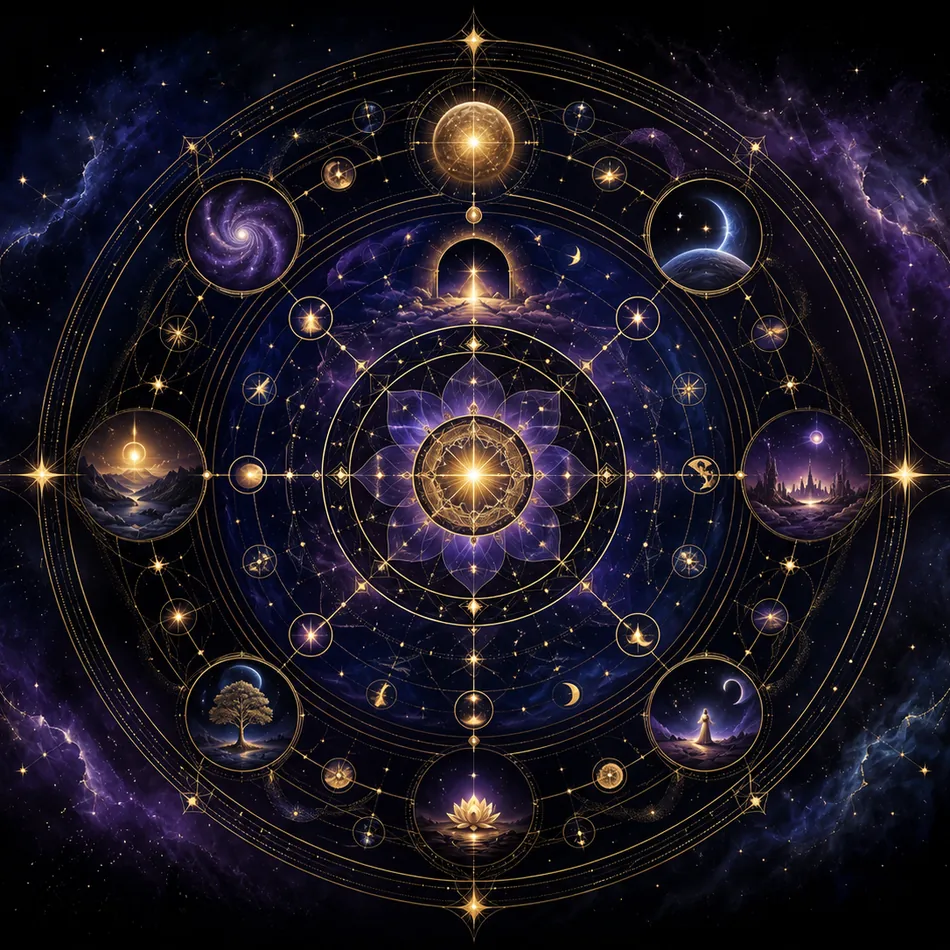
The central orientation
The Dream is one. Its currents meet in consciousness, meaning, participation, and repair.
Metaphysics describes reality. Ethics directs participation. Science clarifies observable patterns. Mysticism recognizes sacred depth. Synchronicity brings attention to meaningful convergence. Dreamist Magic gives intention a vessel through language, symbol, ritual, relationship, and action.
The philosophy then moves outward into creative forces, collective worlds, the soul, and the World to Come. Tikkun Olam runs beneath the entire map because understanding reaches fulfillment through repair.
Nine gateways
A complete map of Dreamist philosophy.
The gateways form a sequence, yet each also stands as its own entry point. Together they move from the nature of reality to the responsibilities of conscious participation.
Foundations
The definition, ethical commitments, and metaphysical structure of Dreamism.
What Is Dreamism?
The Divine Dream, conscious participation, intention, and the purpose of the philosophy.
Enter the first door → 02 · EthicsCore Principles
The commitments that direct spiritual power toward dignity, freedom, responsibility, growth, and repair.
Meet the commitments → 03 · MetaphysicsConsciousness & Reality
G-d, Ein Sof, the soul, the Divine Dream, and the movement from possibility toward form.
Follow the hidden current →Encounter & Participation
Discernment, meaningful convergence, and the ways intention enters form.
Science & Mystery
Evidence, interpretation, uncertainty, reason, experience, and sacred meaning held in disciplined relationship.
Approach the boundary → 05 · MeaningSynchronicity & Signs
Timing, attention, symbolic convergence, discernment, and the experience of being addressed by life.
Read the convergence → 06 · ParticipationDreamist Magic
How thought, speech, symbol, art, ritual, relationship, and material action carry intention into the Divine Dream.
Give intention form →Creative Forces, Shared Worlds & Continuation
The powers that shape creation, civilization, and the soul’s horizon beyond one embodied life.
Order & Chaos
Structure and possibility, vessels and transformation, and the creative tension through which worlds continue.
Enter the two currents → 08 · Shared worldsBabylon & Zion
How stories, technology, institutions, fear, wealth, and collective attention manufacture lived reality.
See the cities within us → 09 · ContinuationSoul & World to Come
Identity, death, grief, transformation, continuing bonds, and what may survive bodily life.
Follow the traveler →How the map moves
Attention becomes meaning. Meaning becomes participation.
Reality gives rise to conscious experience. Attention selects what enters awareness. Meaning gathers around what is encountered. Intention chooses a direction. Dreamist Magic gives that direction form. Form produces consequences, and consequences create the conditions in which repair becomes possible.
This movement occurs in personal choices, relationships, art, ritual, institutions, technology, culture, and the material world. Conscious participation always enters a shared reality.

Beyond the core map
Dreamist Explorations carry the philosophy into developing territory.
The nine gateways contain the established philosophical framework. Dreamist Explorations develops working models, contemporary applications, and speculative essays where Dreamism encounters new technologies, unusual experiences, social conditions, and unresolved questions.
Reality at the Edges is one such exploration: a developing model of attention, participation, symbolic convergence, and the places where ordinary explanation begins to thin.